CASE STUDY 8 OF 8
HORSE FOR SMART GLASSES
HORSE for my smart glasses
I turned solo HORSE into a display-glasses game with one shot call, one score, and four wrist actions. I tested six concepts on the device and took one build onto the court.
Context
Designed, built, and tested on a real court, June 2026.
My role
I owned the concept, interaction design, visual direction, integration, device testing, court testing, and final decisions.
What you see through the glasses
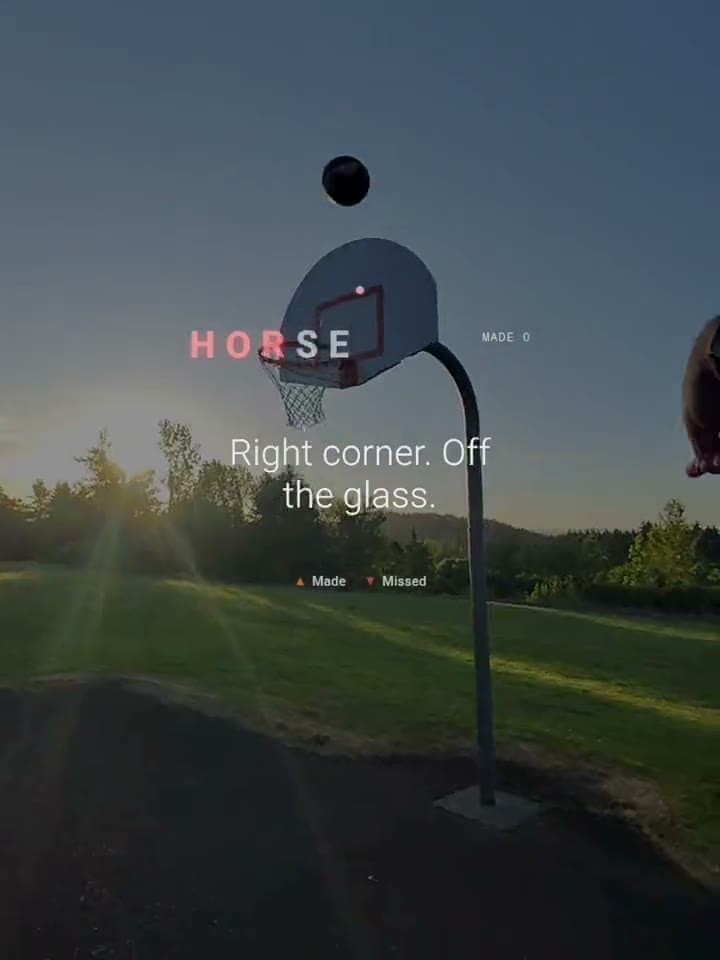
HORSE
MADE 0
Right elbow.
The game is a few words floating over a real court.
On this lens, black renders as transparent. So the interface is only the words that matter: the shot call, the score, and four actions: made, missed, undo, and skip. Everything else you see is the actual court.
- 600 × 600
- display pixels, no scroll
- 4
- directional actions
- 1
- active game view
Why this exists
My wife and I used to play HORSE. These days my hoops are quick solo shootarounds, so I designed the game we used to play for the glasses I already bring to the court. During parental leave, I learned a faster prototyping workflow, moved the promising ideas onto the hardware, and let the court decide what stayed.
The canvas is a lens. The controller is your wrist.
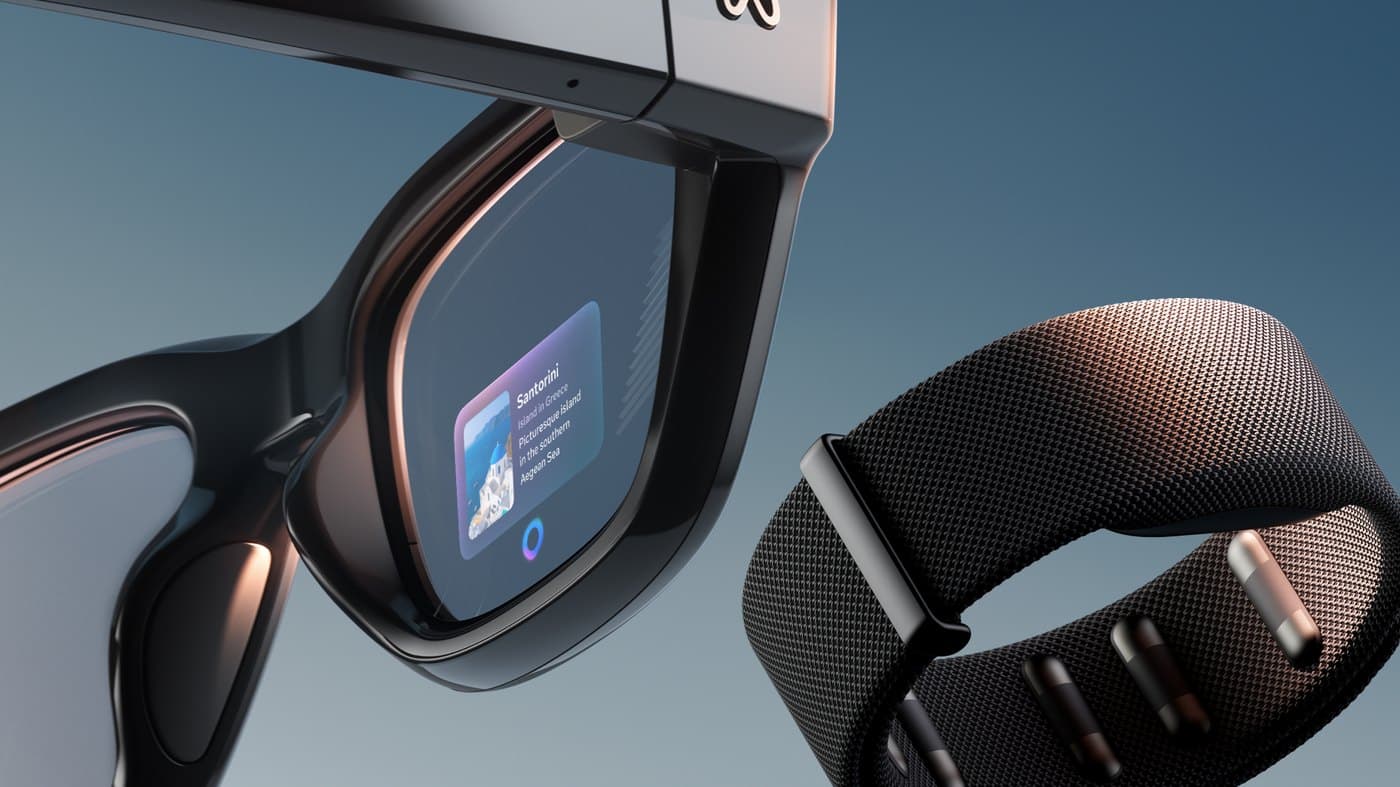
The neural band
It reads the EMG signals in your wrist. The web app receives a pinch to select and directional swipes to move through the game.
On-device testing removed hold and double pinch because they did not fire reliably. Directional swipes record made, missed, undo, and skip. Pinch starts or selects. The glasses system menu handles leaving the web app.
From one hundred directions to one court build
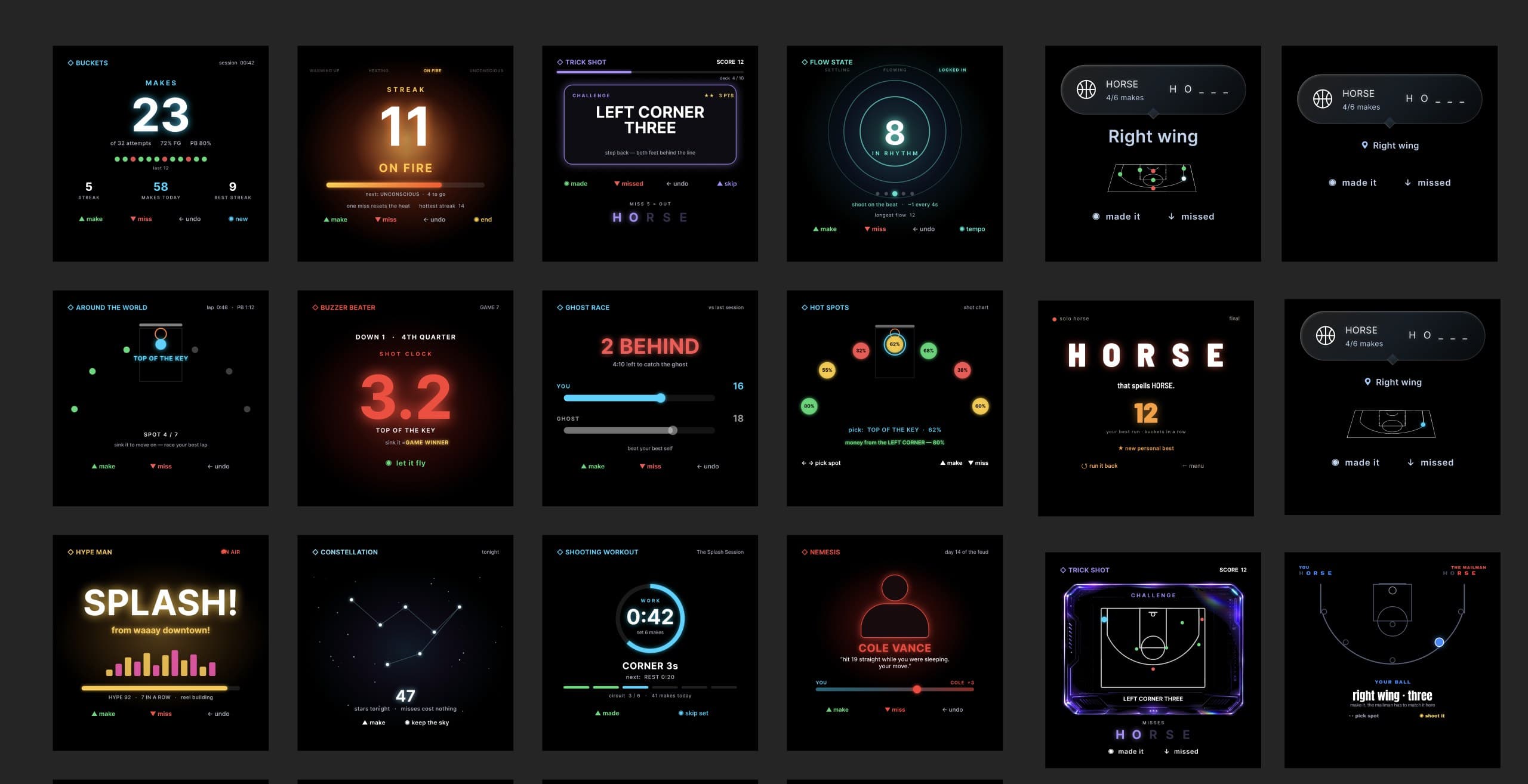
I wrote the lens, court, and gesture limits first, then toggled ideas on and off in working browser builds. The cheap variations gave me options to compare once the work moved to the glasses.
01
Build 100 low-cost variations
02
Test 6 concepts on the glasses
03
Take 1 direction to the court
The count is not the accomplishment. Selection is. Hardware testing removed directions the 600 by 600 lens could not support. Court testing removed anything that competed with the shot.
The court rejected what the browser accepted
BROWSER
Motion looked promising.
A desktop screen made animated score treatments and extra states feel readable.
GLASSES
The lens exposed gesture and glare limits.
Hold and double pinch were unreliable. Bright outdoor light erased subtle detail.
COURT
The shot had to stay primary.
Motion that pulled attention from the rim came out, even when it worked technically.
What testing changed
Three lessons from hardware and court testing
- 01
01
Specific constraints made exploration useful.
I defined the lens, court, and gesture limits before building variations. Better direction produced better options.
- 02
02
Hardware testing cut unreliable gestures.
I moved each promising concept to the glasses early. The lens exposed glare, unreliable gestures, and detail that did not survive outdoors.
- 03
03
The court protected the shot from the interface.
I removed motion and detail that competed with the rim, even when the ideas worked technically.
IMPLEMENTATION NOTE
Claude accelerated implementation. I made the product decisions.
Claude Code generated and revised implementation under my direction. I set the constraints, integrated the build, tested it on the glasses, and decided what earned a place in the game.
TRY THE BUILD
Take the court-tested build for a run
Play in a desktop browser, or add the same build to Meta Ray-Ban Display in Developer Mode.
Other Ray-Ban Meta models do not have the display this game uses.
In a desktop browser, use the arrow keys and Enter.
Install it on Meta Ray-Ban Display3 steps
- 1In Meta AI, open Settings, then App Info. Tap App version five times, then turn on Developer Mode.
- 2Open App Settings, then App Connections, Web Apps, and Add a Web App.
- 3Name it HORSE, paste horse-delight.vercel.app, and tap Connect. Open it from the glasses app grid.
Pinch to start. Swipe up for made and down for missed.
AI working method
How I used AI to move from product decision to working software
- Product decision
- Concept generation, gesture model, display hierarchy, outdoor trials, prototype direction, and synthesis.
- AI-assisted build
- I used AI coding tools to build six playable concepts, then set the gesture model and revised it after on-court testing.
- Evidence
- Exploration: 100 interface variations
- Prototypes: 6 playable concepts
- Display: 600 × 600
REFLECTION
The court made the final edit.
Specific constraints made the exploration useful. Device testing removed what the lens could not support. Court testing removed what the game did not need.