CASE STUDY 3 OF 8
CLEAR WRITER
A spatial journal that opens on today’s page.
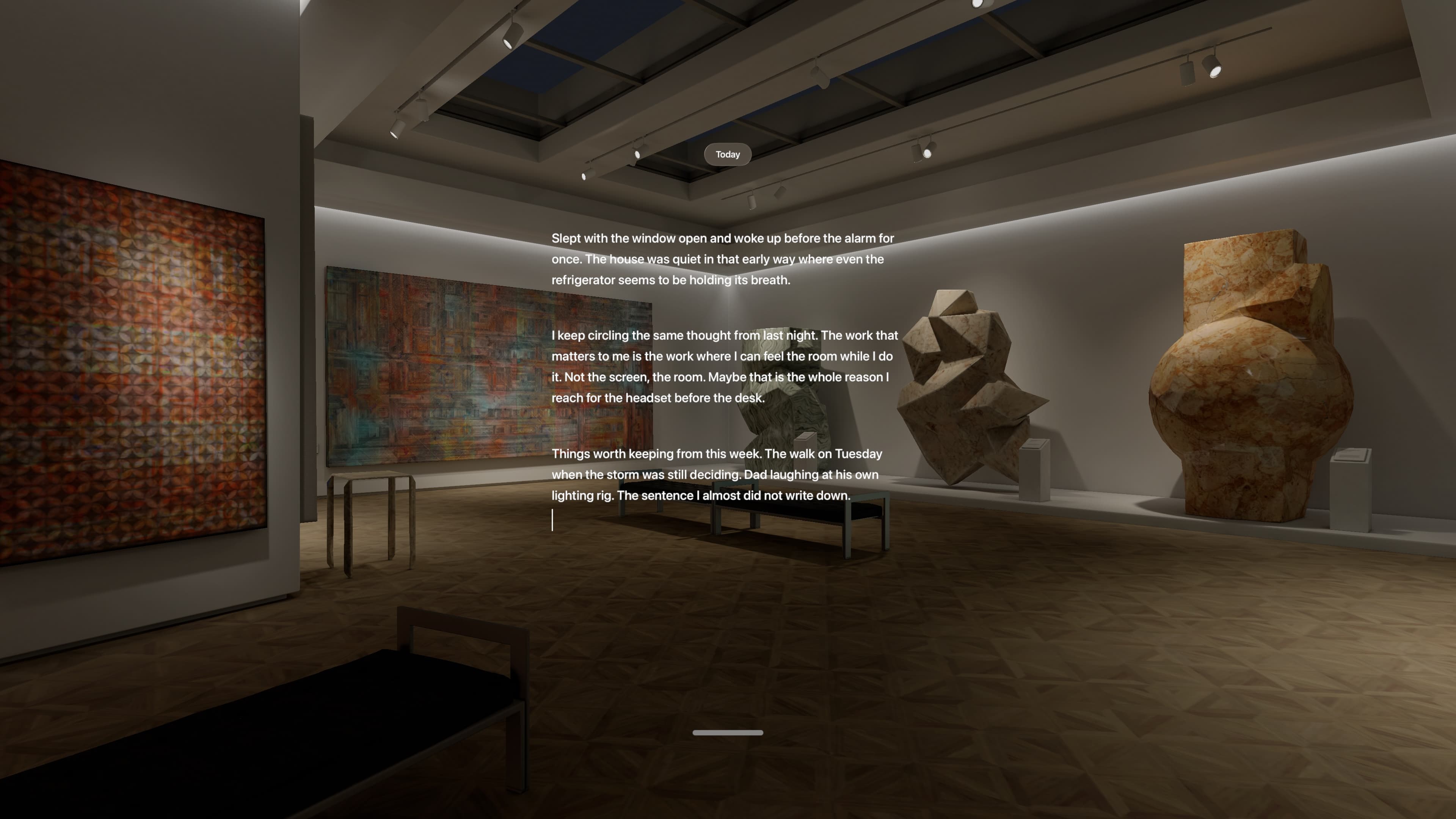
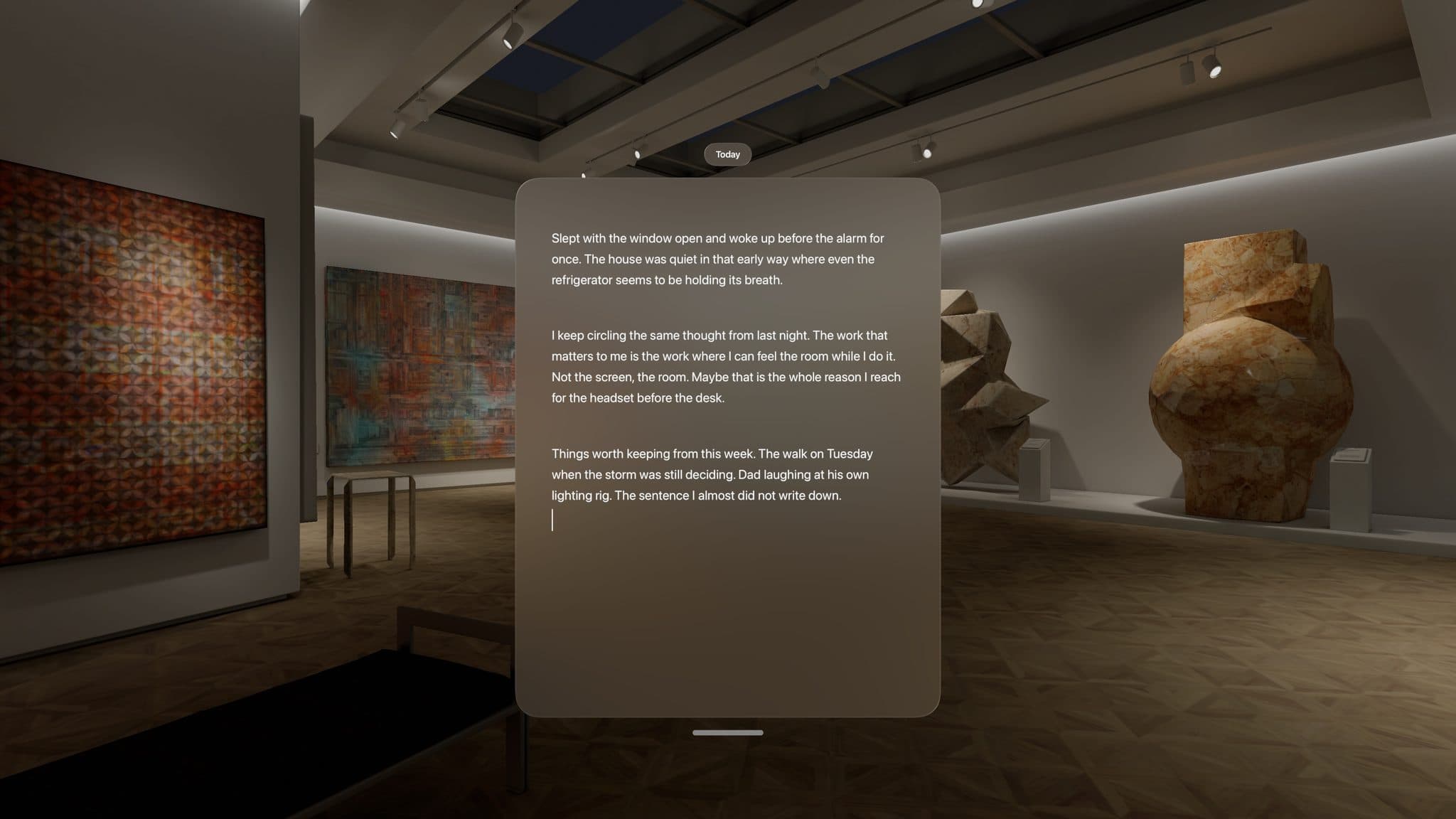
Clear Writer opens on today’s page with the cursor ready. There is no document picker, setup flow, or dashboard between the intention to write and the first word.
Status
Available on the App Store.
Context
visionOS 26 · SwiftUI
My role
I owned the product definition, spatial interaction, writing model, accessibility, device QA, and App Store submission.
- Release
- Version 1.0, build 1
- Technical checks
- 13 passing tests
- Device testing
- Physical Vision Pro QA
- Availability
- Free on the App Store
- Role:
- Solo product designer and product owner
- Privacy:
- Plain-text local storage · No account · No analytics · No tracking
AI working method
How I used AI to move from product decision to working software
- Product decision
- Product definition, spatial interaction, UX writing, design-system translation, device QA, accessibility, and App Store release.
- AI-assisted build
- I used Claude Code to translate Clear Page’s design system into a new SwiftUI app, while I chose the writing model, focus behavior, and release criteria.
- Evidence
- Release: Version 1.0, build 1
- Technical checks: 13 passing tests
- Device testing: Physical Vision Pro QA
01
Start with writing, not management.
Today’s page opens with the cursor ready. Autosave begins with the first keystroke, and typing folds the controls away.
There is no save button. The core loop is short: open, write, leave, return.
02
A sibling needed shared laws, not copied screens.
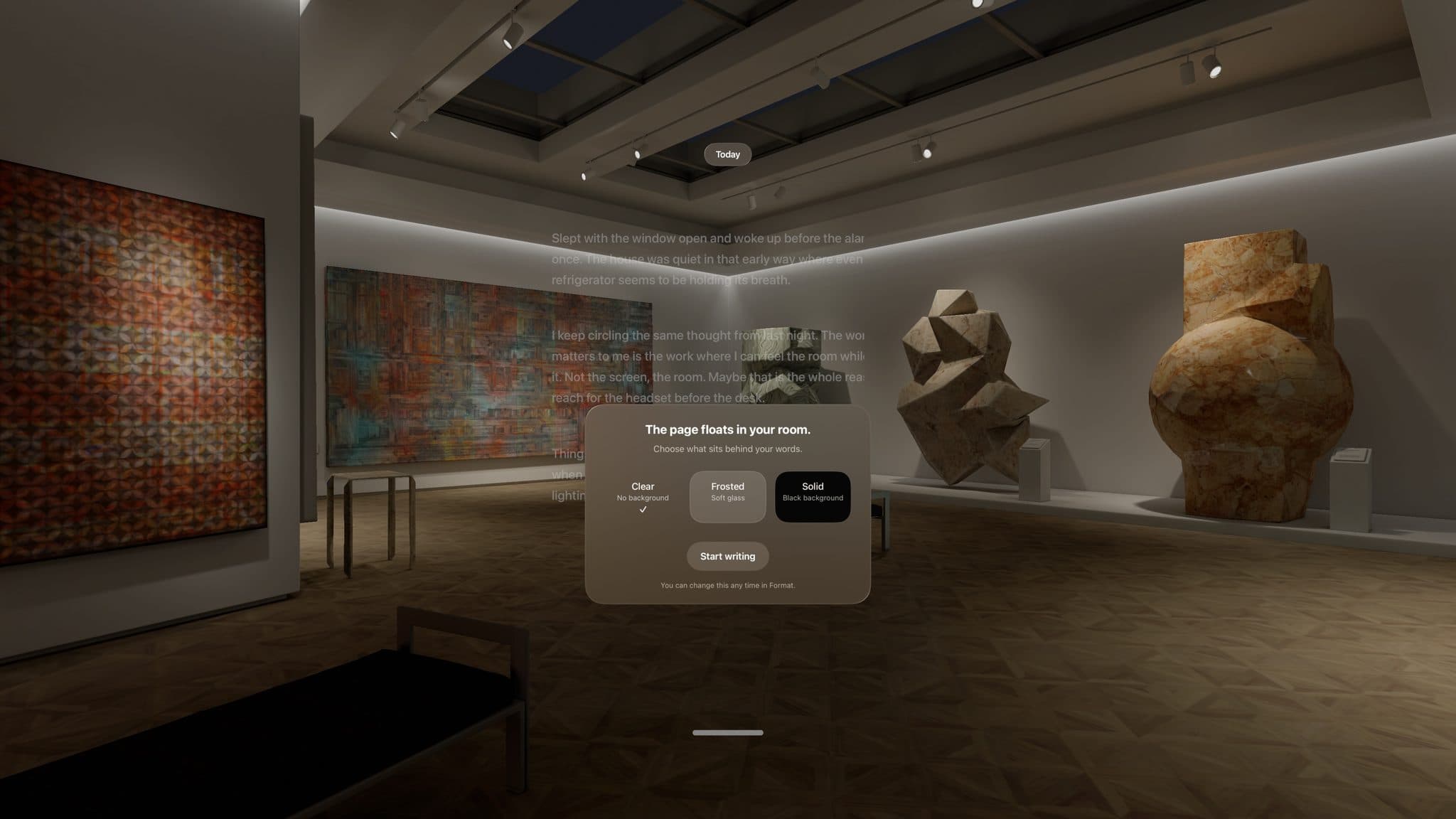
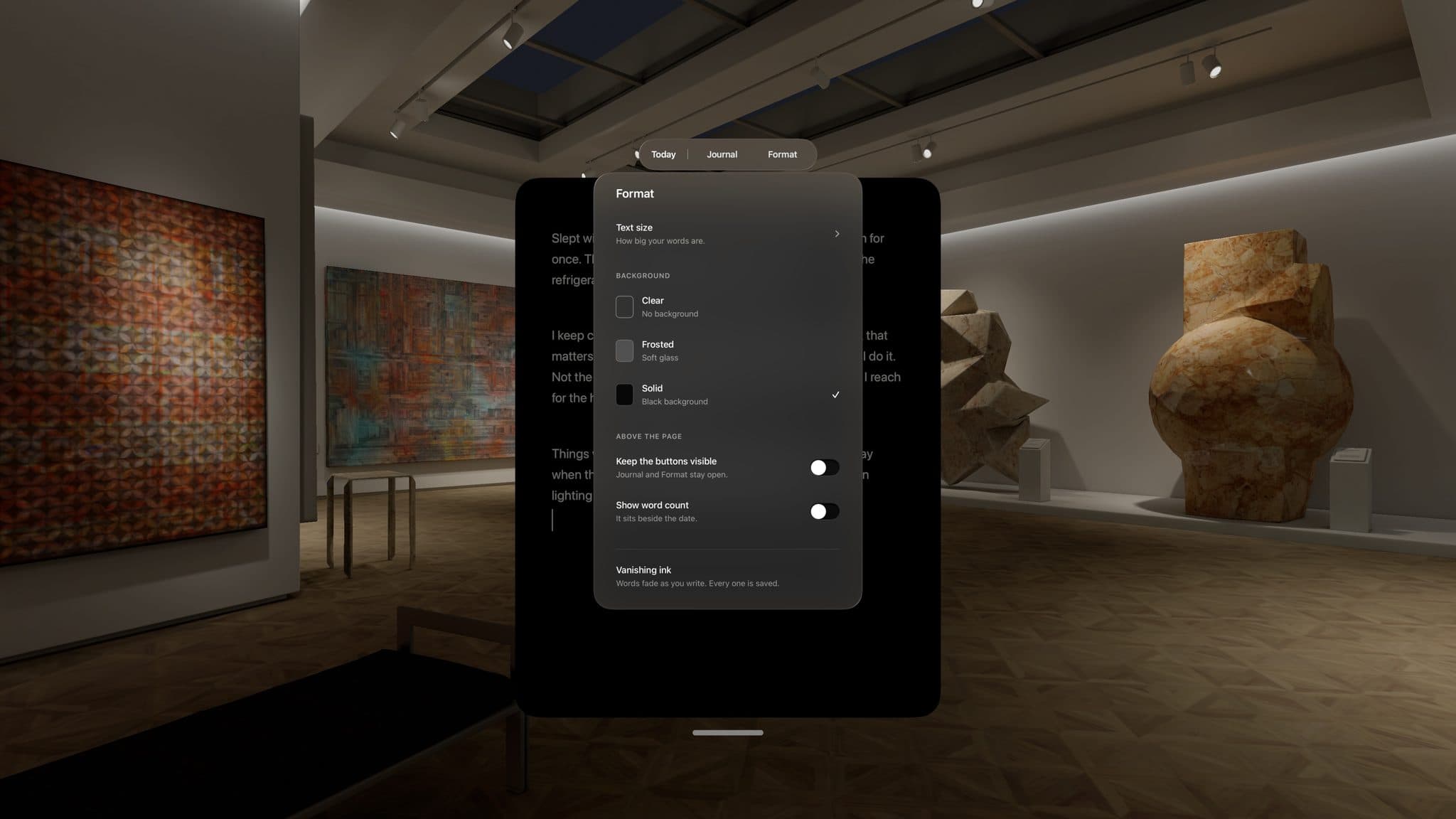
Clear Writer inherits Clear Page’s typography, three materials, depth system, and quiet top control. The behavior changes wherever writing demands a different answer.
Clear Page opens books. Clear Writer receives words. One turns a page to quiet its controls. The other quiets them when typing begins.
03
Four focus modes led to Vanishing Ink.
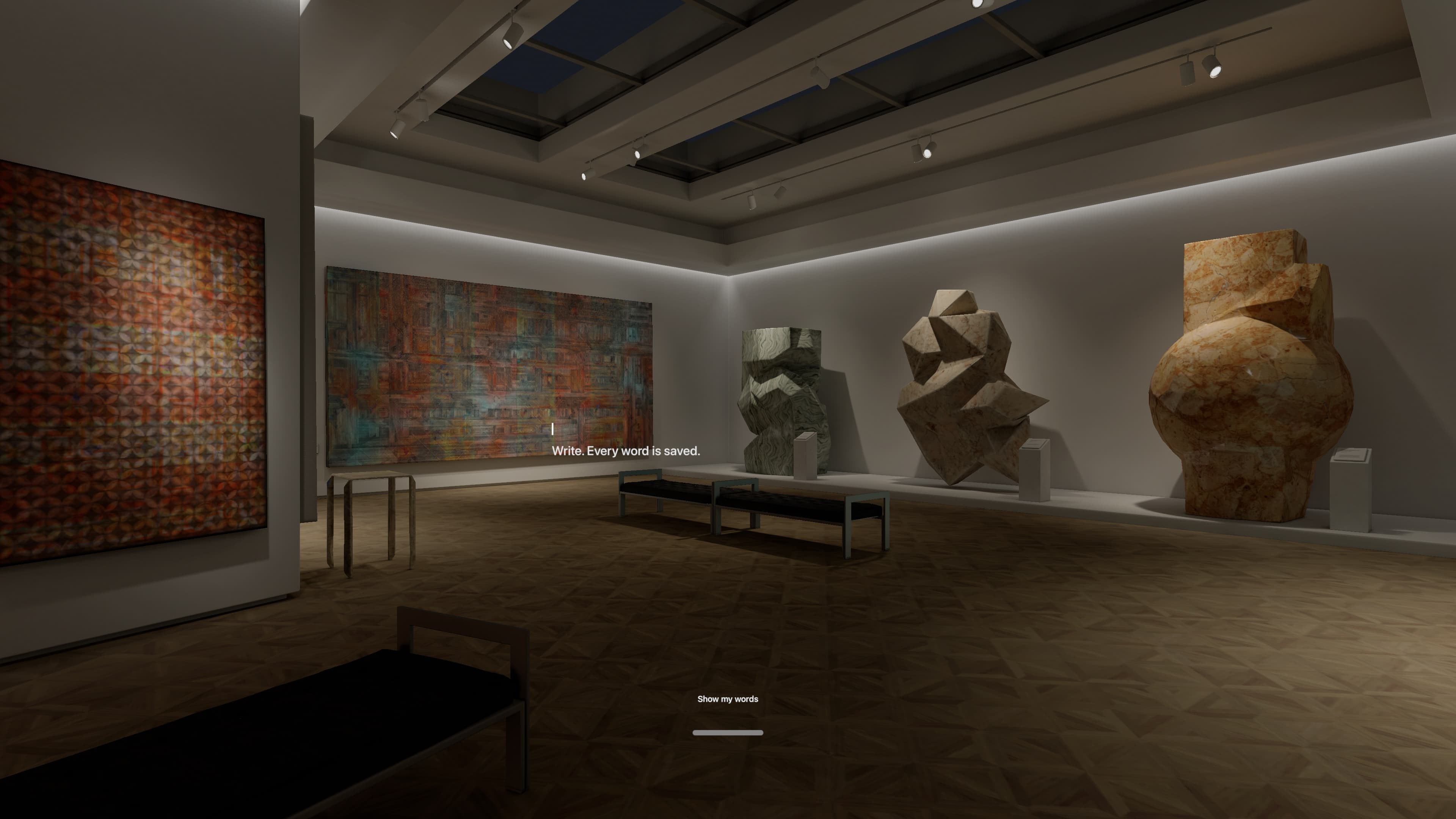
The Carriage held the active line in place. Lit Line lifted the current sentence. Vanishing Ink faded completed words. The Wake moved each finished sentence backward through real depth.
The Wake was the most spatial, but it made every period a visual event. Vanishing Ink won because the interface recedes without interrupting the writer. Every word remains saved, and Show my words brings it back.
04
Spatial hierarchy had to include Apple’s surfaces.
Page text lifts 22 points. App panels sit at 50. Owned third surfaces sit above them. The first-launch card rests at 100.
Apple’s share sheet cannot move forward. When it appears, the room steps back. The app panel returns to the page plane and hushes beneath the system surface.
05
Quiet meant refusing productivity theater.
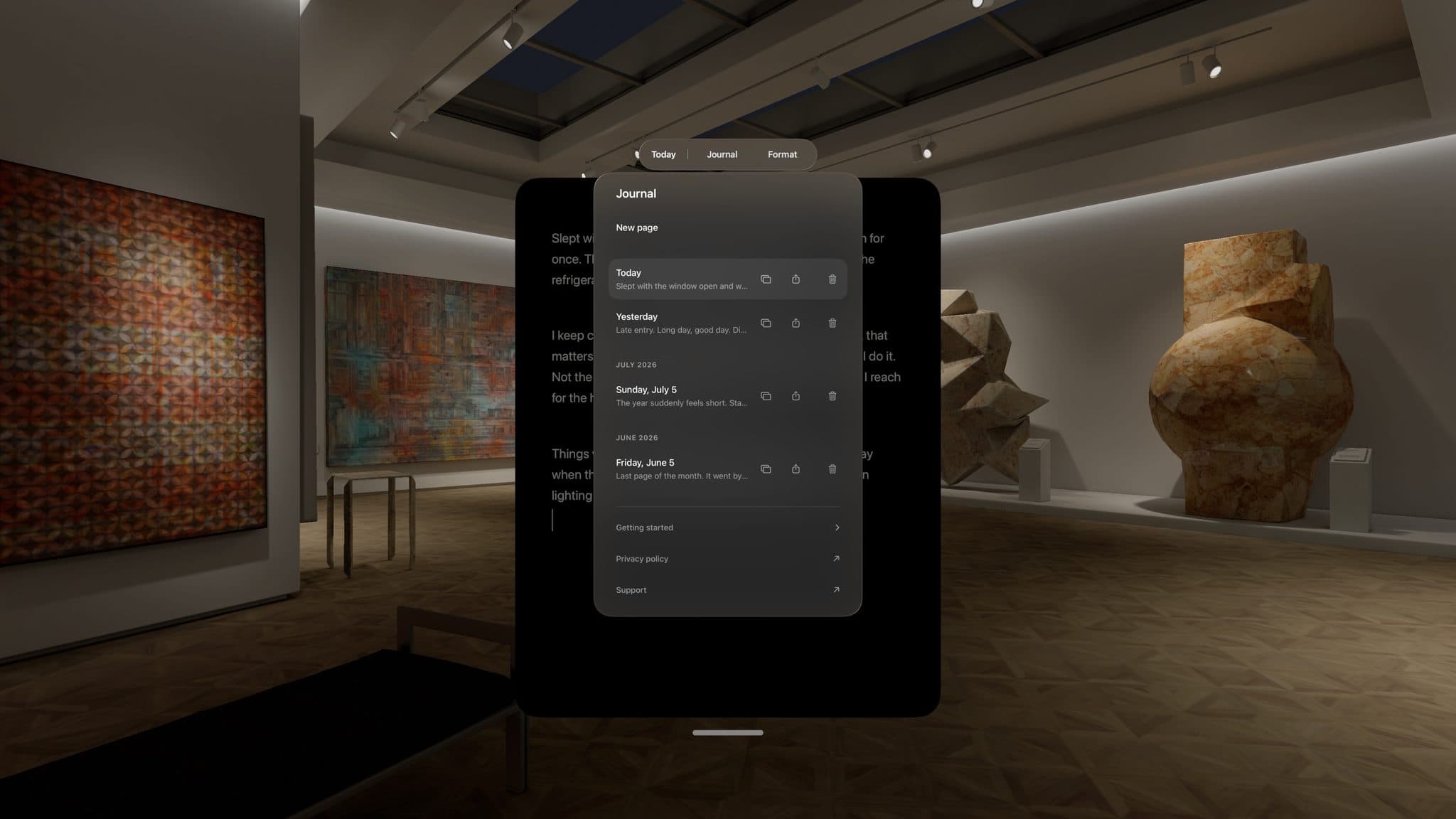
There are no streaks, goals, reminders, badges, prompts, or daily scores. Word count stays off unless the writer chooses it.
Entries are stored as plain text. If the index becomes unreadable, the app preserves it and rebuilds the journal from those files.
Current boundary
What this work does not claim
Version 1.0 does not include search, tags, folders, whole-journal export, an app lock, or encryption at rest. Public availability is not adoption evidence, so there is no usage or retention claim yet.
REFLECTION
Shared rules made room for a different product.
A design system became useful when it helped the reader and writer make different decisions consistently.