WORKING PROTOTYPE · SUMMER 2026
APPLE WATCH · A GAME FOR REAL HOOPS
HORSE for the Apple Watch
You shoot a real basketball. The watch calls the shots, keeps the count, and taps your wrist to reduce scoreboard glances between shots.
Context
A native watchOS 26 prototype in SwiftUI, with a Smart Stack widget.
My role
I set the interaction model, watchOS direction, integration, physical-device testing, and final decisions. Claude Code generated and revised the SwiftUI code under my direction.
ROLE • INTERACTION, DIRECTION, TESTING
BUILT • SWIFTUI, WATCHOS 26
INPUT • TOUCH + SWIPES
FEEDBACK • HAPTICS
The whole game fits in a brief glance
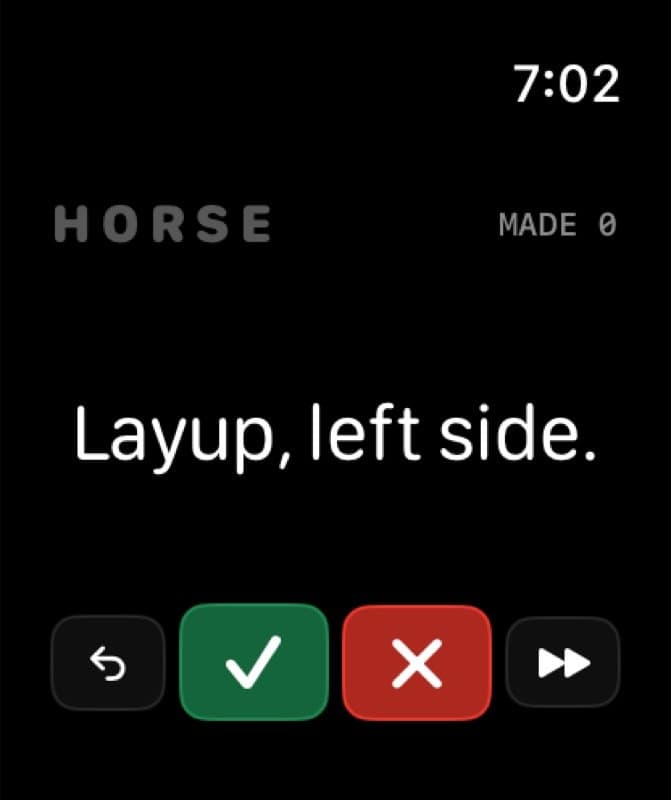
The primary decision is made or missed.
The watch calls a shot: layup left side, floater in the lane. You take it for real, then answer with a tap. Green means made, red means missed, swipe right to skip, swipe left to undo.
Five haptic patterns distinguish made, missed, the final-letter warning, game over, and reset. That feedback reduces the need to reread score state after each input.
- 4
- game actions
- 5 sec
- undo window
- 4
- shot packs
Why a basketball game lives on a watch
I play solo shootarounds in short windows: fifteen minutes, an empty court, a ball, and whatever is already on me. A phone is a poor scorekeeper when both hands are busy. The watch is on my arm before I leave the house.
The game first ran on my smart glasses; this is the same design language rebuilt native in SwiftUI. One directional grammar covers both devices: up for made, down for missed, left to undo, and right to skip. Learning one teaches the other.
- ROLE
- Interaction design, direction, integration, and physical-device testing
- TIMELINE
- July 2026 · ten tagged design checkpoints
- PLATFORM
- watchOS 26, SwiftUI, Smart Stack widget
- SWIPES
- Up made, down missed, left undo, right skip
A native watch prototype designed for fewer glances
4
game actions: made, missed, undo, skip
4
shot packs: Kids, Close, Normal, and Tricks
10
tagged design checkpoints
How to read this
Build evidence from the working prototype. No App Store or TestFlight release is claimed.
One run, four screens
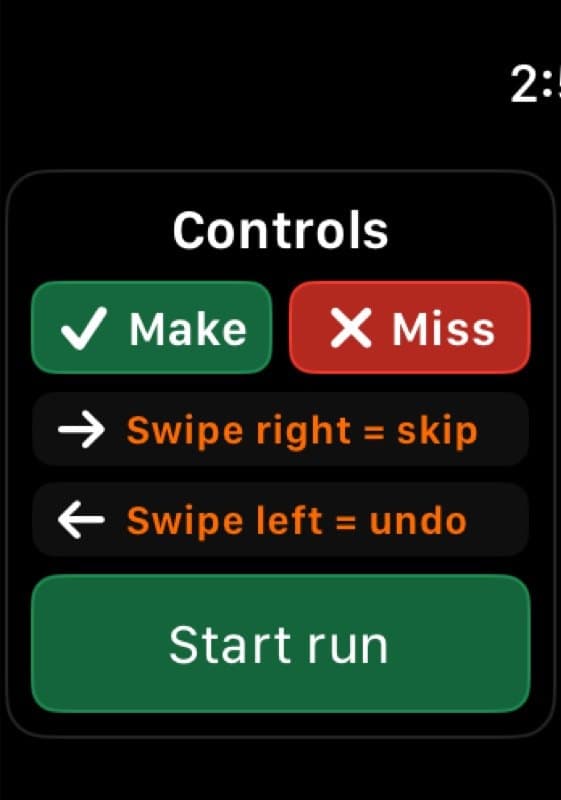
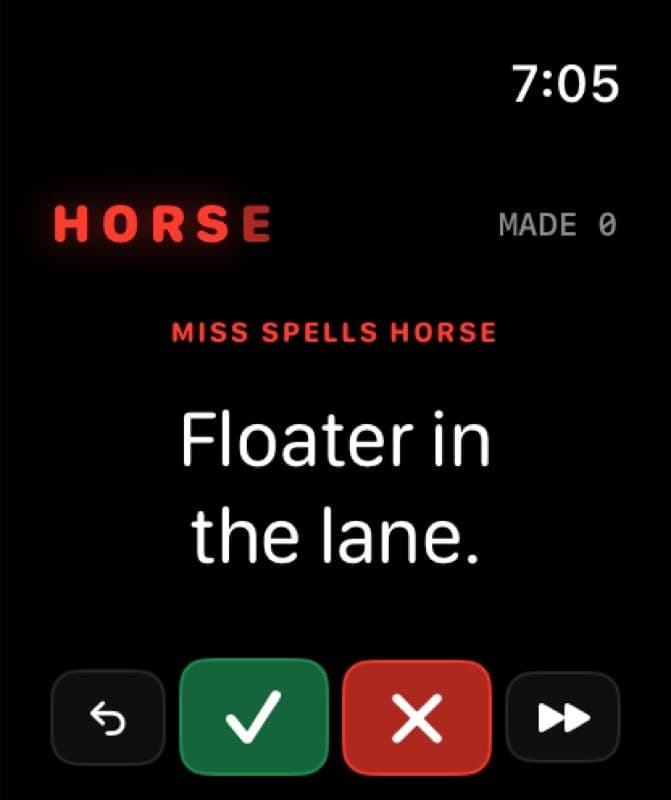
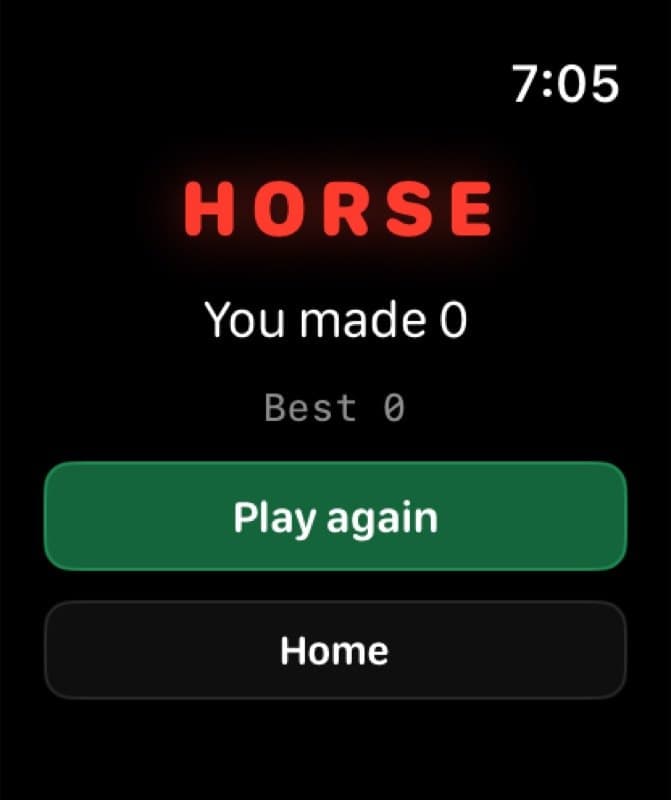
A missed-shot overlay appears for three seconds after each new letter. The final letter advances to Game over.
Outdoor mode and shot packs
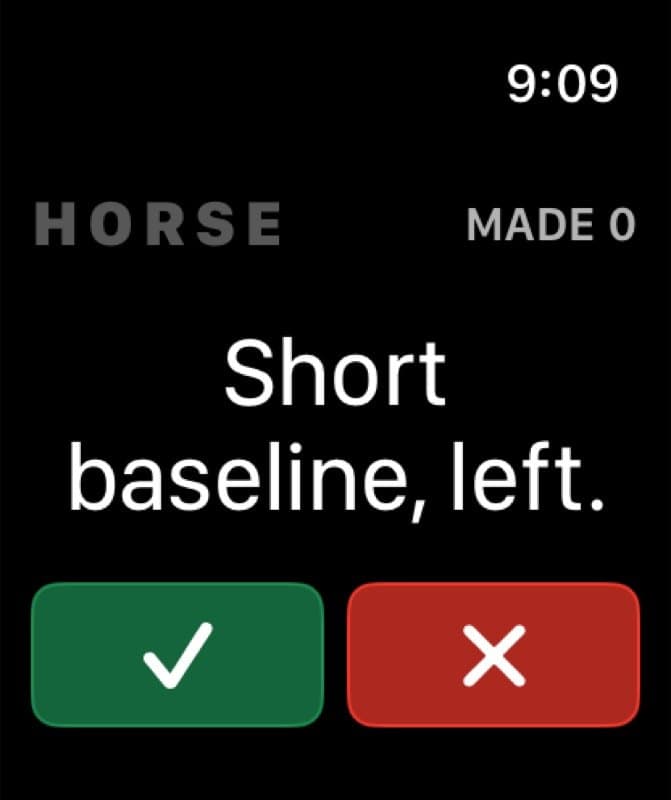
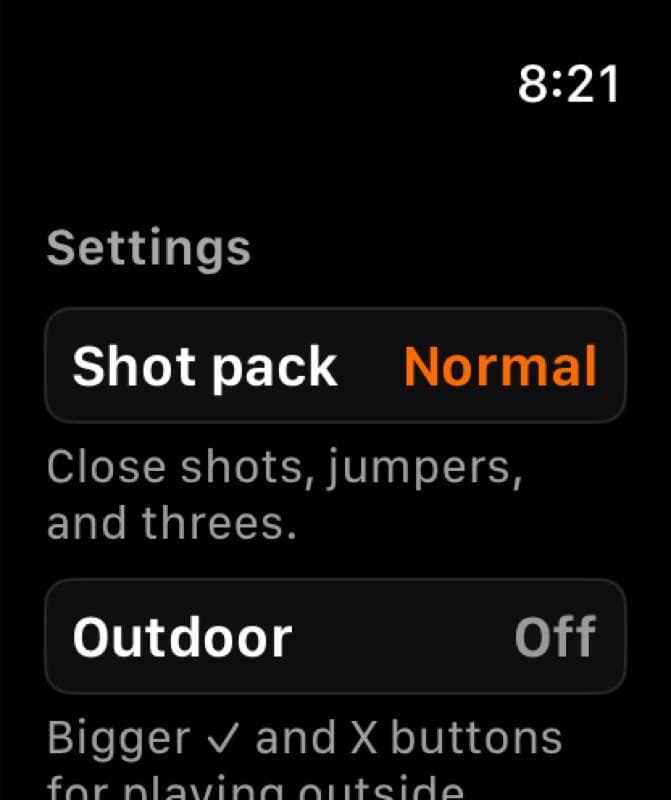
Outdoor mode started with a failed session in real sun: I could not hit my own targets reliably. The result is a higher-contrast, larger-target option for bright-court play.
THE THREE CALLS THAT MAKE IT WORK
Designed for eyes-up play
ONE LANGUAGE
One directional grammar across two devices.
Up made, down missed, left undo, right skip. The same grammar runs my smart-glasses build, so either device teaches the other.
HAPTICS
Haptics confirm the state change.
Five distinct patterns confirm made, missed, the final-letter warning, game over, and reset. They reduce the need to reread score state after each input.
REACH
Bright sun changed the target size.
A bright-court session exposed targets I could not hit reliably, so Outdoor mode increases target size and contrast. Shot packs change the calls without changing the interaction model.
REFLECTION
Porting reveals the core design.
The shared interaction grammar was the core idea; screen layout, controls, and feedback had to change with the hardware.